Every author
Drafting, editorial guidance, coaching, book memory, revision safety, and publishing.
See common capabilities
Feature reference
77 named capabilities across the foundation every author needs and the specialist systems fiction and nonfiction require.
No vague “AI-powered” bucket. Each entry names the tool, the job it does, and how it relates to the author's manuscript.
Start with the tools every serious book needs, then follow the work into fiction or nonfiction.
Drafting, editorial guidance, coaching, book memory, revision safety, and publishing.
See common capabilitiesCharacter, scene, story, worldbuilding, continuity, and series intelligence.
See fiction capabilitiesSources, claims, citations, evidence audits, glossaries, indexes, and reference production.
See nonfiction capabilitiesSignature capabilities
These are not broad promises. They are distinct tools with a specific job, context boundary, and relationship to the author's work.
Select a word or phrase and Scritorio reads its immediate prose context before suggesting alternatives. Each option is framed as a choice for meaning, tone, or intensity. Nothing replaces the author's words until the author chooses it.
Choose a character and a chapter or scene boundary. Scritorio combines the character dossier, voice notes, and only the manuscript evidence available through that moment. Useful inventions remain clearly marked as possibilities instead of silently becoming canon.
The coach begins with the author's goal, diagnoses one useful target, and creates a durable exercise with constraints and a rubric. The author writes the response; the coach reviews the attempt without taking over the prose.
The current 22-module foundations path moves from intention, character desire, conflict, point of view, and story shape through a complete draft, reader response, structural revision, line revision, and reflection.
The Worldbuilding Auditor reads the relevant manuscript and Codex evidence, identifies contradictions or underdeveloped consequences, and helps the author explore options without confusing a suggestion with established world canon.
The Story Brainstormer works from the book's existing constraints and unresolved threads. It separates what the manuscript already establishes from speculative paths the author may accept, reshape, or discard.
Complete catalog
The inventory below is maintained against the product specification and implementation—not assembled from marketing synonyms.
A focused writing room built around ordinary files the author can keep, inspect, and move.

Keeps manuscript prose in readable files inside the author's own project folder.
Starts novels, short stories, nonfiction books, reference handbooks, textbooks, and worldbuilding projects.
Organizes acts, parts, chapters, entries, scenes, front matter, back matter, notes, and beat sheets.
Provides familiar rich editing controls while preserving Markdown as the source of truth.
Hides the surrounding workspace when the author wants only the page.
Keeps planning and scene breakdowns connected to manuscript units without publishing them as prose.
Plans every manuscript unit across POV, status, beat, purpose, timeline, location, word targets, and revision notes.
Keeps the book's chosen author identity connected to its publishing metadata.
Adjusts the writing font, size, and weight without changing the manuscript's Markdown.
Keeps the open page visible beside editorial conversations for direct comparison.
Syncs selected titles and encrypted mobile notes without uploading manuscript prose.
Lets the author decide which supporting notes may be considered by AI workflows.
Searches manuscript, Codex, research, coaching, and supporting files in the local book.
Brings an existing manuscript or reviewed Markdown handbook folder into Scritorio.
Adapts the writing workspace to the author's preferred display.
Small, contextual tools for the sentence in front of you. They advise; they do not silently rewrite.
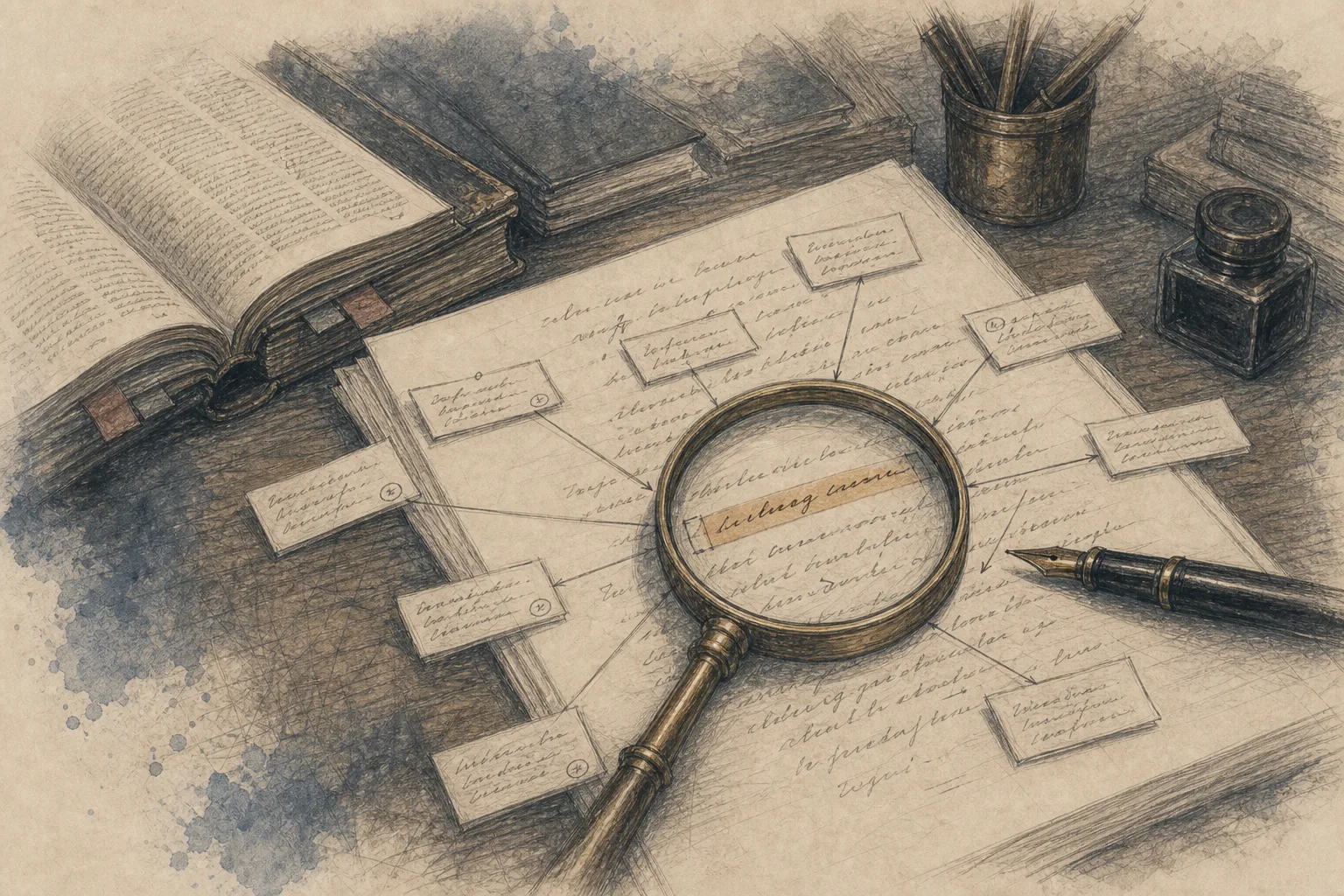
Suggests context-aware alternatives with distinctions in meaning, tone, and intensity.
Explains a selected word as it is being used in the surrounding passage.
Examines a selection for vagueness, repetition, or imprecision and explains whether a change would help.
Adds author notes and editorial markers directly to passages without altering the manuscript text.
Suggests a concise title for a note while leaving the note itself untouched.
Choose the mind the manuscript needs instead of sending every question to one agreeable chatbot.

Answers questions about the current passage, chapter, or book using retrieved manuscript evidence.
Holds a time-aware, voice-grounded character conversation at a story boundary chosen by the author.
Explores premises, conflicts, consequences, scene possibilities, and alternate directions while labeling speculation.
Reviews structure, causality, stakes, setup, payoff, pacing, and consequence.
Examines desire, agency, emotional logic, relationships, pressure, and character change.
Tests world rules, institutions, locations, technology, terminology, and consequences against book evidence.
Checks whether facts, events, relationships, objects, and timeline details can all be true together.
Responds only to the pages and audience boundary selected, without private notes or future knowledge.
Lets the author adjust a specialist's identity, working guidance, and review posture.
Shows intended context before a request and connects responses to supporting manuscript locations.
Stores advisor and character conversations inside the local book project.
Creates a concise, manuscript-grounded chapter synopsis for planning and review.
Practice the craft, receive specific feedback, revise, and keep what you learn across books.

Diagnoses one craft target, proposes a bounded task, reviews the attempt, and recommends a next revision.
Saves prompts, constraints, rubrics, submissions, feedback, revisions, and reflections as project files.
Moves exercises through active, submitted, reviewed, revised, completed, or archived states.
A 22-module draft curriculum for developing, drafting, reviewing, and revising a complete short story.
Uses neutral exercises or the current book while keeping practice noncanonical by default.
Carries author-confirmed goals, keeper passages, lessons, insights, and practice history across books.
Will extend guided learning into deeper fiction and nonfiction paths.
Keep the book's facts, sources, language, and private thinking close enough to help without flattening them into one context dump.
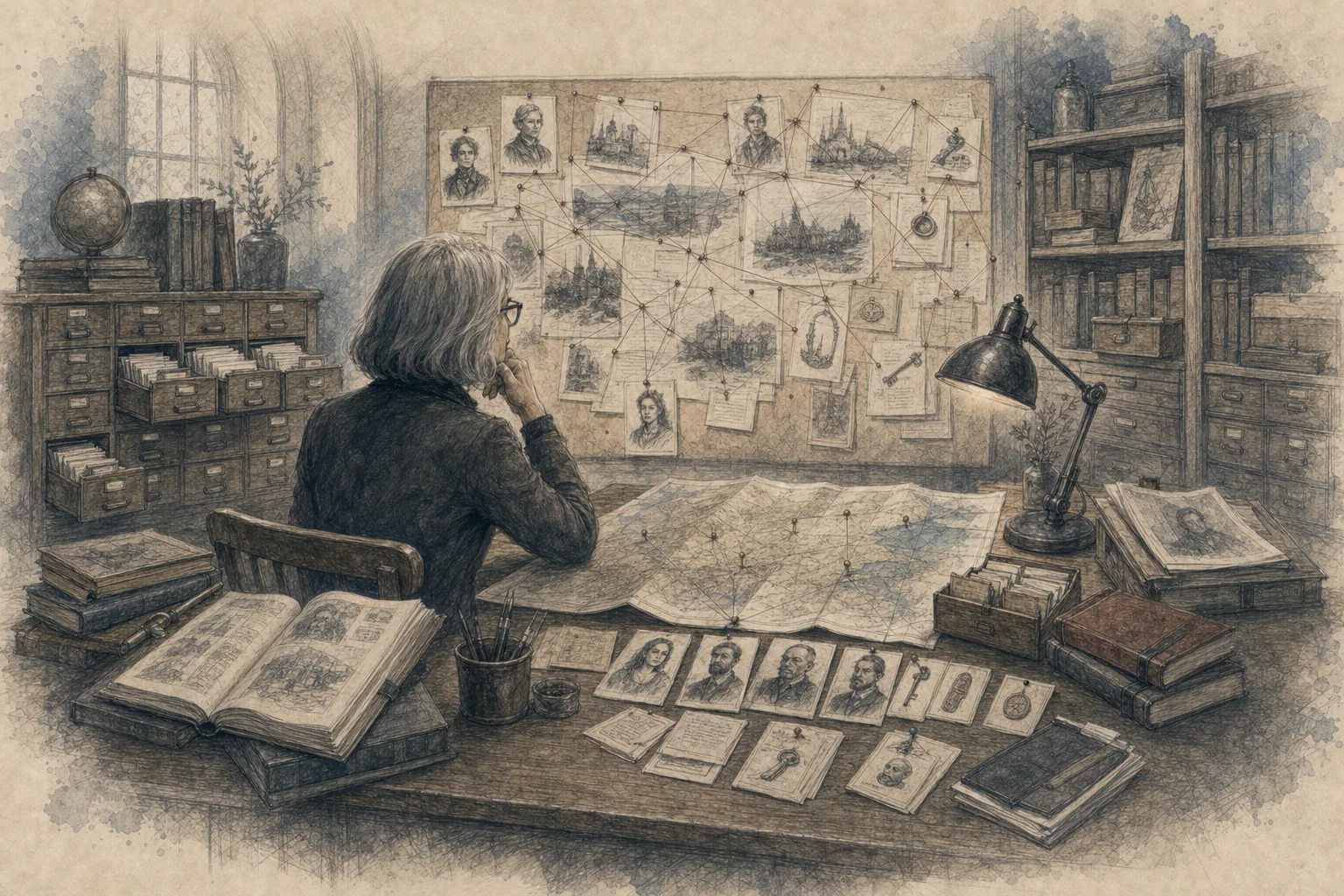
Stores local records for characters, locations, organizations, items, concepts, events, and style rules.
Tracks role, relationships, appearance, motivation, conflict, arc, secrets, continuity notes, aliases, and images.
Provides author-controlled voice, worldview, interiority, and stance for character conversations.
Organizes portable entries with multiple categories, tags, aliases, structured details, sections, and image galleries.
Finds names and aliases across the manuscript, counts appearances, and flags ambiguous matches.
Surfaces evidence-backed people, places, organizations, objects, concepts, events, and style material missing from the Codex.
Turns suggested entries and updates into changes the author must review before they become canon.
Finds relevant manuscript and Codex evidence without treating every note as equally authoritative.
Stores sources, claims, glossary terms, index terms, research notes, quotations, excerpts, and ideas.
Distinguishes story canon, source-backed claims, project authority, and mixed evidence.
Shares selected canon and style context across books while preserving book-specific manuscripts.
Will find conceptually related passages even when they do not share exact words.
Treat a researched book as an argument with traceable evidence—not as fiction with different chapter names.
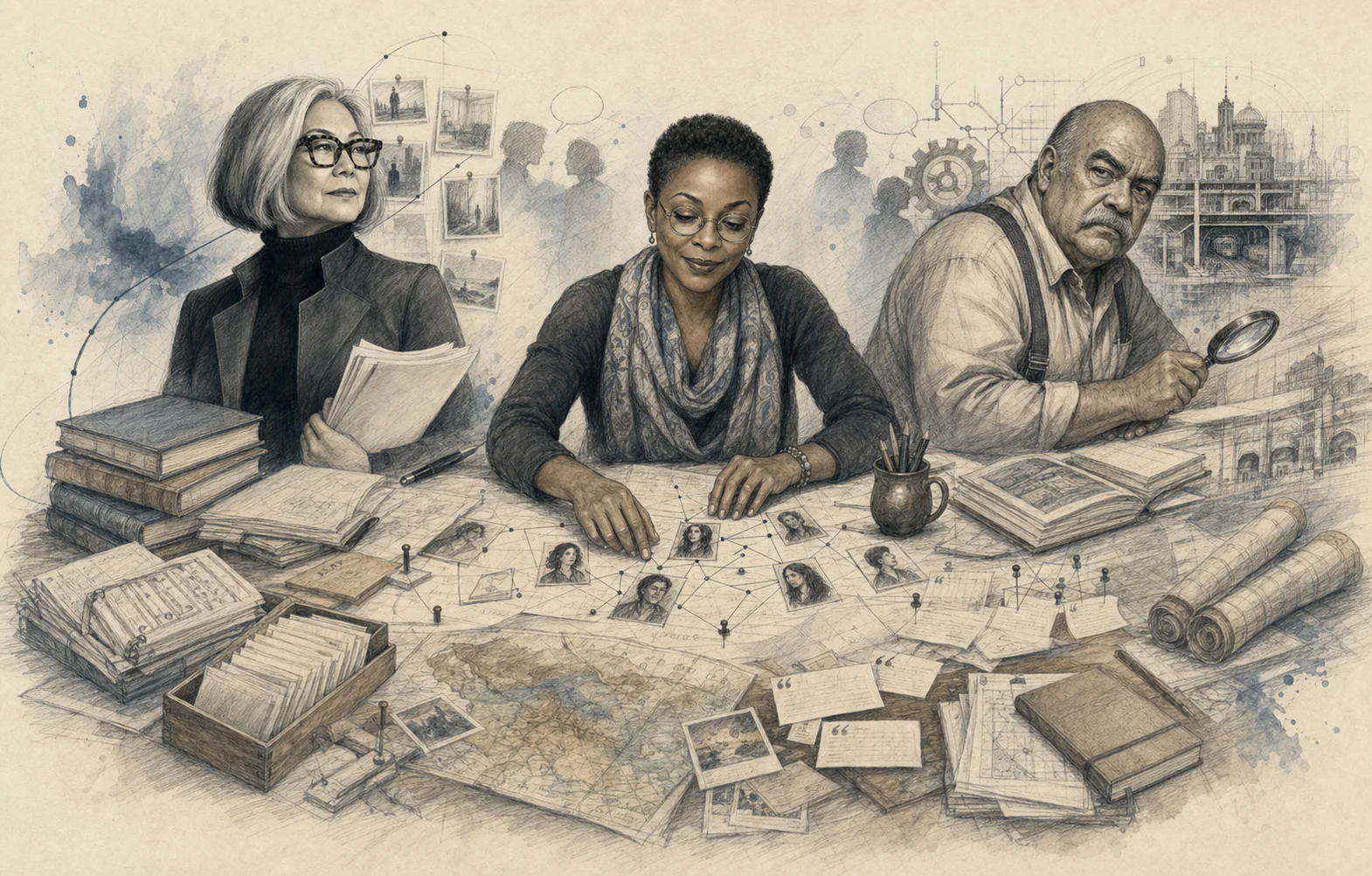
Shapes general nonfiction, narrative nonfiction, memoir, reference, technical, textbook, and academic books around their actual work.
Keeps structured source metadata and imports BibTeX, RIS, and CSL JSON records without hiding the original research trail.
Connects manuscript citations to source records through durable citation keys and page or section locators.
Finds missing keys, unrecognized citations, malformed references, and footnotes that cannot be resolved before export.
Records a claim, its manuscript location, verification state, and the sources or project canon that support it.
Requires factual findings to identify their evidence basis and prevents invented citations or unsupported verified language.
Builds bibliography back matter from sources actually cited by the manuscript rather than every item in the research library.
Maintains preferred terms, definitions, index hierarchy, cross-listing, and manuscript references as portable project records.
Produces reviewable bibliography, glossary, and index documents that can join preview and export when the author includes them.
Adds evidence, reference-book, textbook, and subject-aware editorial roles suited to the project's profile and authority model.
Make ambitious changes with a visible way back—and keep the project usable outside Scritorio.

Captures named versions of the author-owned project and shows what changed.
Returns to an earlier book state only after the author explicitly chooses it.
Moves manuscript and project material through recoverable trash workflows.
Preserves conflicting edits rather than overwriting newer manuscript text.
Exports and imports a project archive without making Scritorio the only route to its files.
Recreates search and metadata indexes from the author's project when needed.
Keeps conversations, editorial evidence, and operational history with the book on the author's machine.
Carry the reviewed manuscript toward useful book files and, over time, a complete author-controlled production room.
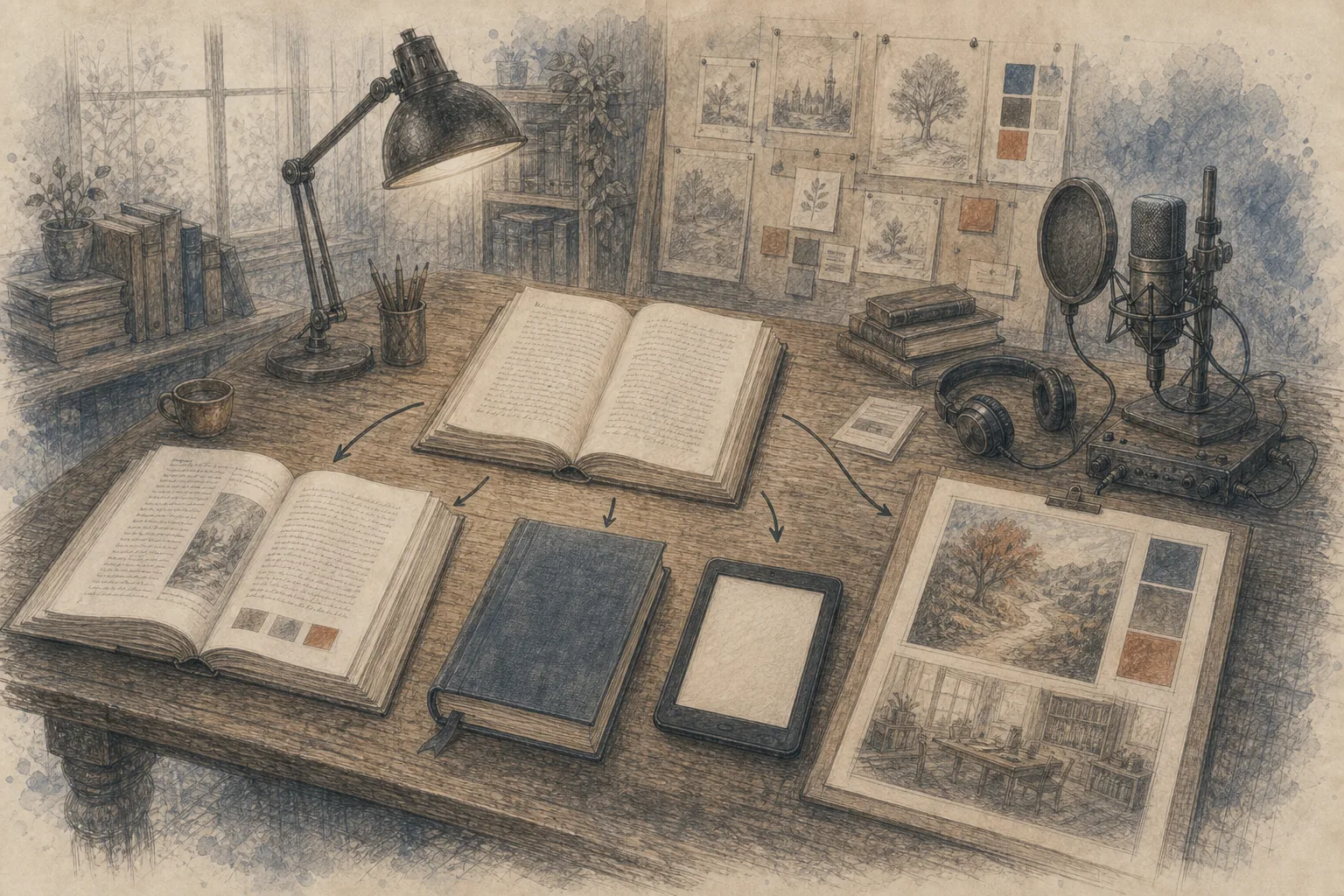
Assembles included manuscript units into a reading-order preview.
Produces a reviewable PDF from the selected manuscript structure and publishing settings.
Produces an editable editorial handoff from included manuscript units.
Builds an ebook with navigation, metadata, optional pages, images, and validation support.
Identifies missing metadata, unresolved production tasks, and export issues before release.
Develops diagrams, maps, timelines, concept art, covers, and interior-image directions with local provenance.
Will carry approved cover, illustration, figure, and layout assets into production-ready packages.
Plans voices, pronunciations, segments, review passes, and local audio outputs.
Will check packages against services such as IngramSpark without locking the book to one vendor.
Scritorio is still in development
We are building Scritorio around serious books and real author workflows.